
IBR Releases 2025 Annual Report


The Institute of Behavioral Research has released its 2025 Annual Report, capturing a year of steady growth and measurable impact. From launching the $7.2 million NIH-funded BRIDGE project to advancing research that strengthens public health and justice systems, 2025 reflects work that is active, applied, and grounded in real community partnerships.

This year’s report highlights more than $5 million in active funding, projects operating across 13 states, and record growth within the SOAR Lab, where undergraduate students are gaining hands-on experience and contributing to real-world research projects. Together, these efforts reflect IBR’s sustained commitment to strengthening systems, supporting communities, and developing the next generation of behavioral science leaders.

Explore the full 2025 Annual Report to see the progress made this year and what’s ahead.
  • A Big Finish for IBR SOAR Lab Students This Semester

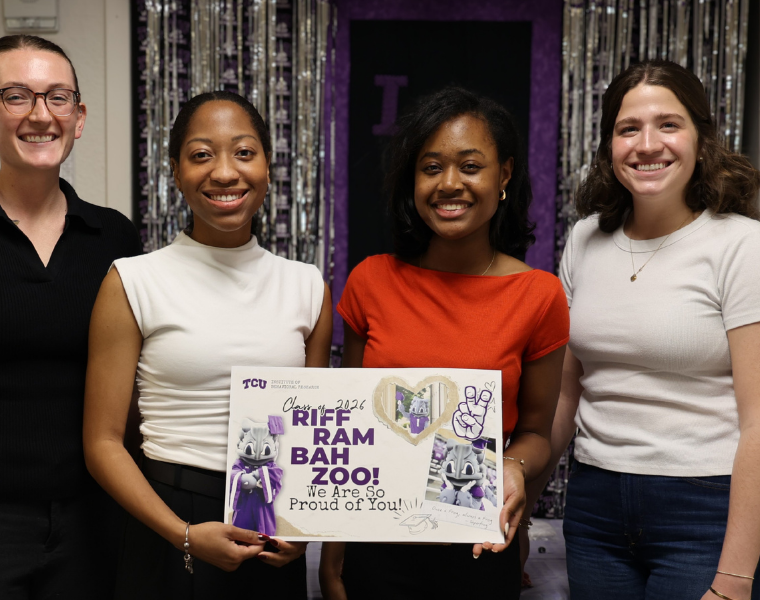
    Several SOAR students are closing out the semester with major milestones. Anne Shubert is heading to Creighton University School of Law for her J.D., and Grace Sikiyan will attend Northern Arizona University for a PsyD program. Jefflyn Hall was also nominated as Psi Chi president, highlighting her role and leadership within the group. SOAR graduate

    Read More

  • IBR SOAR Lab Students Present at TCU Research Symposium

    Earlier this month, students from the Institute of Behavioral Research (IBR) SOAR Lab presented their work at TCU’s Student Research Symposium. They shared a range of projects and represented the lab well. One student stood out, with Brooke Drenowatz, a senior psychology student, receiving the Psychology Senior Scholar Award, which is given to selected graduating

    Read More

  • ,

    Do Criminal Records Reveal Who Needs Substance Use Treatment? New IBR Study Challenges That Idea

    A new study from the Institute of Behavioral Research at TCU pushes back on a common assumption in correctional settings: that criminal history can signal who needs substance use treatment. Published in Criminal Justice Review, the study analyzed records from more than 56,000 people released from the Illinois Department of Corrections. Researchers compared arrest history with

    Read More