Translation to practice
Interventions
Practical resources for treatment, recovery, and organizational change.
Explore manual-guided interventions designed to address client needs across the treatment process. Use resources together, or as supplements to other treatment materials.
Not sure where to begin?
Start with the Interventions Matrix to compare resources, then explore the manuals and tools that fit your needs.
Training & implementation support
Put these resources into practice
The Center for Translation to Practice offers self-paced learning, live training, and consultation to help teams use IBR resources in their programs.
Find your resources
Search resource names and descriptions, or narrow the library by type.
Showing 9 of 9 resources
Plan and choose
Tools to compare resources and connect client assessments with treatment planning.


Using client assessments
The Using CEST Guide connects client assessment scores with treatment planning and monitoring.
Interventions
Browse collections and individual programs. Each destination keeps its full set of manuals and session downloads.

Comprehensive Interventions
Multi-session materials on recovery skills, relationships, parenting, HIV/AIDS education, and preparation for change.

Targeted Interventions
Targeted resources on motivation, anger, communication, thinking, social networks, and HIV prevention.

Mapping Interventions
Visual guides for communication, planning, and decision-making in individual and group counseling.
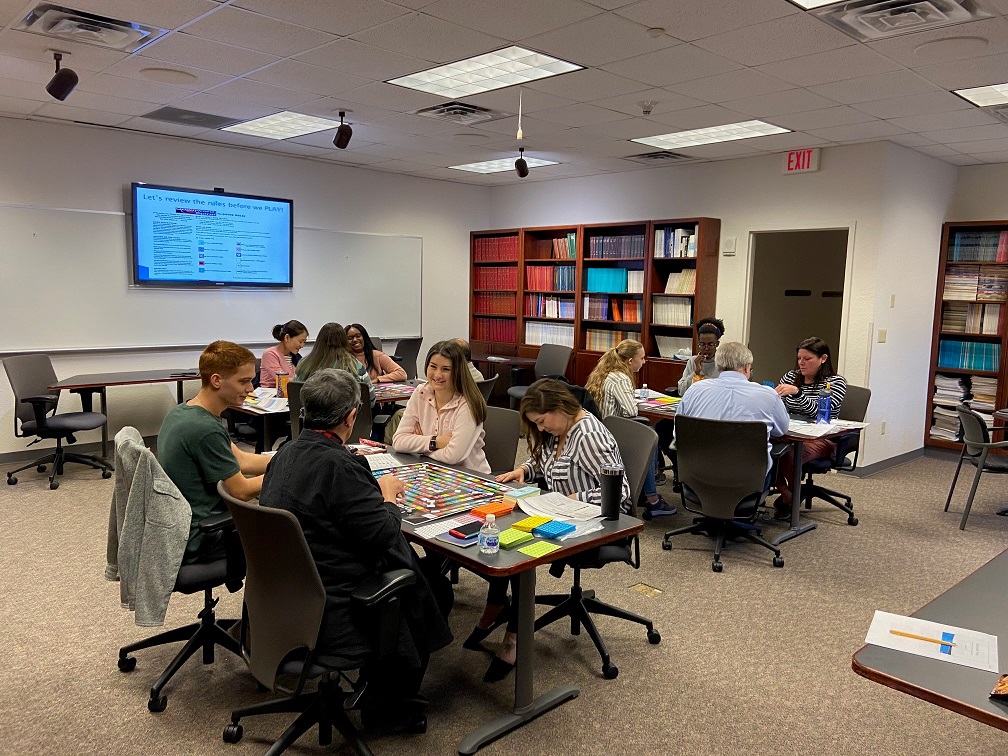
Downward Spiral
Printable gameboards, instructions, and materials for adult and adolescent versions of the Downward Spiral game.
Workplace training
Resources for workplace substance use prevention.

Workplace training
Team Awareness training packages for workplace substance use prevention, including four-hour and eight-hour versions.
Archived Interventions

WaySafe
Leader materials, six participant workbook sessions, and resources for mapping a healthier future.

TRIP
Treatment Readiness and Induction Program: a full manual, chapter downloads, videos, and supporting resources.
No matching resources
Try another search term or choose a different type.
Background & overview
The approach behind the resources
Assessments and interventions, working together
The TCU Treatment System connects assessments with manual-guided interventions that target clients’ needs at different stages of treatment. Research underlying the TCU Treatment Process Model (Simpson, 2004; 2006) provides the framework. TCU Assessment Forms link client and program measures to this process, while organizational resources address the treatment agency’s role in delivering services.
Use the combination that fits
Interventions can be combined or used alongside other treatment resources. Their applications extend within and across treatment stages, allowing programs to select resources around client needs and progress.
Developed in real-world treatment settings
The resources grew out of service gaps and unmet counseling and organizational needs in substance abuse treatment programs. Much of the work was supported by NIDA-funded TCU projects, including DATAR, CETOP, Women/Children, and CJ-DATS.
Settings have included community-based outpatient methadone and drug-free services, prison-based treatment, and intensive residential care. Clients have included men and women, sometimes with children, with varied drug-use histories and legal involvement. Modest adaptations to language and illustrations have supported use across diverse settings.
Manuals are focused, practical, and flexible. Counselor training generally follows a train-the-trainers model, with intervention objectives, role-playing, practice, and adherence to core intervention elements.
Built on visual mapping
TCU Mapping-Enhanced Counseling uses guide maps, free-form maps, and information maps to help clients and counselors work through treatment topics. Research has shown benefits for communication, planning, and decision-making. The guides also support counselor training.
Foundational research: Dansereau, Joe, & Simpson (1993); Dansereau, Dees, & Simpson (1994).
Putting visual mapping into practice
Choose a guide map for your session
The Mapping Matrix helps counselors select guide maps for use in TCU Mapping-Enhanced Counseling. Its introduction and instructions explain how to use the matrix when choosing maps.
Support for organizational change
Organizational interventions address program functioning and readiness for innovation, training, and adoption. Related work includes DATAR and Drugs in the Workplace.
TCU Treatment Process Model
Five stages of treatment
The sequence the interventions are organized around (Simpson, 2004; 2006).
1
Induction
Induction into treatment
2
Engagement
Engagement in treatment
3
Early recovery
Early recovery in treatment
4
Retention
Adequate retention before treatment release
5
Re-entry
Preparation for community re-entry
Connect assessment with care
Plan. Monitor. Adapt.
Client assessments help connect treatment planning with client needs and progress. The Using CEST Guide explains how to use TCU Client Evaluations of Self and Treatment in individual or group counseling.
The guide covers assessment scales, program comparisons, assessment methods, and clinical applications of CEST scores.
Pair with forms
TCU Assessment Forms
Link client and program measures to the same treatment process the interventions follow.